
LIFESTYLE WRITER
COMMUNITIES living alongside wildlife in Zimbabwe are increasingly turning to technology to help them navigate one of conservation’s most persistent challenges, human-wildlife conflict.
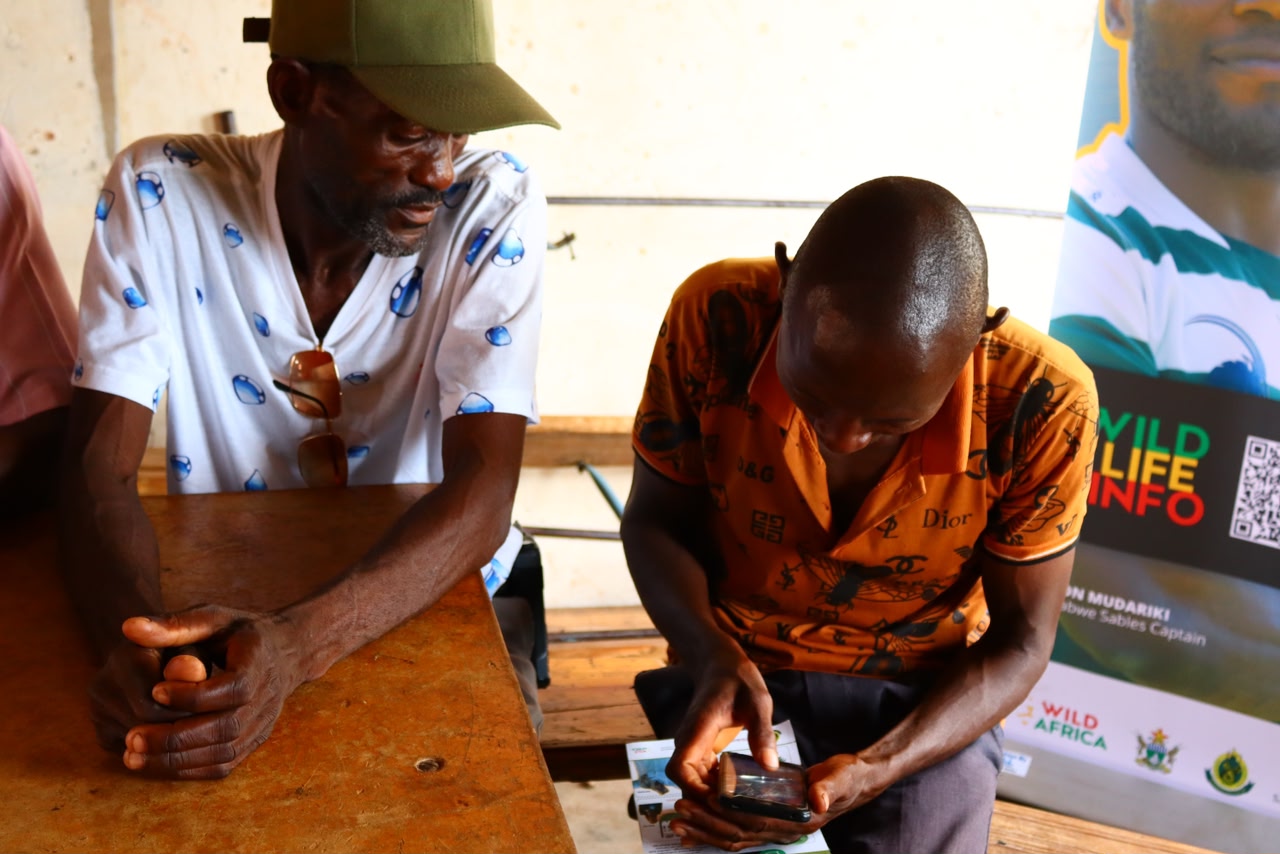
Launched in September 2024 by Wild Africa in partnership with Save the Elephants and the Zimbabwe Parks and Wildlife Management Authority (ZimParks), the Wildlife Info Line is helping communities access practical, research-based information that can improve safety, protect livelihoods and foster coexistence between people and wildlife.
The platform was created to ensure that communities have access to reliable information on wildlife behaviour and proven mitigation measures at their fingertips. Information on elephants is drawn from decades of research conducted by Save the Elephants across Africa, while information on other species has been developed in collaboration with conservation experts and organisations including Wildlife Conservation Action, led by renowned conservationist Moreangels Mbizah.
“This new WhatsApp tool designed by Wild Africa is helping people to access clear advice and learn about practical tools to improve coexistence with elephants,” said Lucy King, Coexistence Director for Save the Elephants. “We’re delighted that our Coexistence Toolbox manual is providing the foundational resource that can now be accessed for free through the Wildlife Info Line to anyone who needs the support.”
The Info Line was initially launched in English before expanding its reach through the introduction of a Ndebele version in November 2025, allowing more communities in wildlife-rich areas to access information in their preferred language.
Since its launch, the service has been rolled out in Hwange, Victoria Falls and Siakobvu in Kariba District.
To improve connectivity in remote areas, Wild Africa has supported local implementing partners with Starlink internet kits, enabling communities to access the WhatsApp platform and the wealth of information it provides.
The service, available on WhatsApp, provides guidance on personal safety, livestock protection, crop protection and practical ways of reducing conflict with wildlife.
It also helps communities better understand animal behaviour, allowing them to make informed decisions when wildlife enters their villages, fields or grazing areas.
For communities in Hwange, the Info Line has become an important source of knowledge and support.
“We have seen community members become more confident in dealing with wildlife challenges because they now have access to information that was previously difficult to obtain,” said Ndlelende Ncube, Director of Tikobane Trust in Dete.
“The platform provides practical solutions that people can immediately apply, and communities appreciate being able to learn from experiences and research gathered from different parts of Africa.”
In Victoria Falls, local conservation practitioners say the platform is helping communities expand their toolbox of mitigation measures.
“Human-wildlife conflict is dynamic and animals can adapt to some deterrent methods over time,” said Malvern Karidozo of Connected Conservation.
“The Wildlife Info Line exposes communities to a broader range of approaches and empowers them to test solutions that are appropriate for their local circumstances.”
The platform has also been welcomed in Kariba District, where communities regularly interact with elephants and other wildlife species.
“Knowledge is one of the most powerful tools we can provide communities living alongside wildlife,” said Joan Banda, Research and Conservation Leadership Program Officer at Wildlife Conservation Action.
“When people understand animal behaviour and have access to practical information, they are better equipped to protect themselves, their crops and their livestock while reducing unnecessary risks.”
Beyond developing the platform, Wild Africa has also leveraged its expertise as a conservation communications organisation to drive awareness and encourage uptake of the service.
The organisation has produced a series of public service announcements promoting the Wildlife Info Line featuring influential Zimbabwean personalities from sport, media, music and entertainment.
Among those lending their voices to the campaign are Sables captain Hilton Mudariki, broadcaster Zandile “Zaza” Ndlovu, radio personalities MsRed and Butterphly, musicians Sandra Ndebele, Mzoe 7 and Voltz JT, as well as socialite Tariro Gezi, among others.
Wild Africa says the campaign demonstrates the power of trusted voices in helping deliver important conservation information to communities.
“The Wildlife Info Line was developed to put valuable conservation knowledge directly into the hands of communities,” said Farai Chapoterera, Country Manager for Wild Africa Zimbabwe. “Too often, information remains concentrated among experts and institutions.
This platform helps bridge that gap by ensuring that community members can access practical, evidence-based advice whenever they need it.”
Chapoterera said the initiative reflects the importance of combining scientific research, local expertise and modern technology to address conservation challenges.
“As conservation organisations, our role is not only to protect wildlife but also to support the people who share landscapes with wildlife every day. By empowering communities with information, we are helping them make safer decisions and strengthening coexistence between people and wildlife.”
As Zimbabwe continues to balance wildlife conservation with rural development, access to timely and reliable information is becoming increasingly important.
For many families in wildlife-rich areas, a simple WhatsApp message is now providing knowledge that can help safeguard lives, crops, livestock and livelihoods.
The Wildlife Info Line stands as an example of how partnerships, technology and community engagement can work together to address one of the country’s most pressing conservation challenges, proving that the right information, delivered at the right time, can help people and wildlife thrive side by side.