
DAKARAI MASHAVA
Assistant Editor
FOR many, chimurenga music legend Thomas ‘Mukanya’ Mapfumo is the greatest Zimbabwean musician who ever walked the earth.
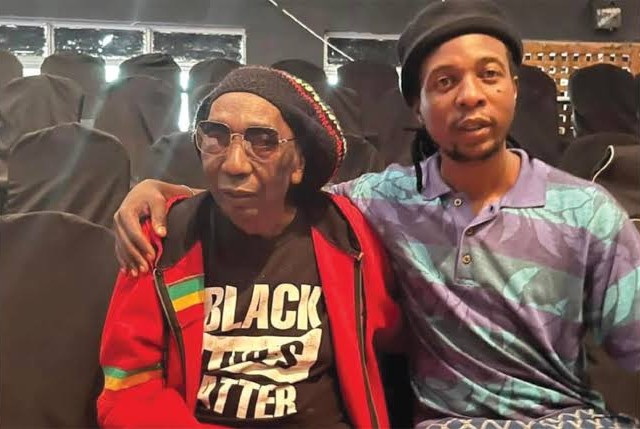
With a penchant for speaking his mind, damn the consequences, it is not surprising that whenever speaks, controversy follows. In typical fashion, his recent out-of-the-blue cease-and-desist order, banning his nephew Kurai Makore from performing, recording, or commercially exploiting any songs from his catalogue, has set tongues wagging on Zimbabwe’s music scene and across social media.

Through his Chimurenga Music Company, Mapfumo has declared that family ties do not grant copyright privileges.
“Certain mischievous media outlets have irresponsibly peddled the false claim that Kurai Makore was confirmed as the heir to the chimurenga music throne or legacy. This is a complete falsehood. Thomas Mapfumo has never designated any heir or successor to his musical legacy – by blood, by decree, or by any other means.
“In African culture and in the arts, it is the people – the fans, the nation, and history itself – who ultimately decide who carries the mantle of a legend. What was an invitation to open for Thomas Mapfumo in a couple of shows was spun into a handing down of a torch to Kurai by some sections of the media,” said Mapfumo’s Chimurenga Music Company in a statement, adding that no one is allowed to exploit the Mapfumo name for commercial gain without consent and a valid licence from the Zimbabwe Music Rights Association (Zimura) as this would be a violation of the Copyright and Neighbouring Rights Act [Chapter 26:05] of Zimbabwe.
“Any artist is free to play whatever music they desire, but no one is authorised to play Thomas Mapfumo’s music without copyright clearance. No individual, family member, or media house can manufacture, claim, or bestow such a title.”
The Copyright and Neighbouring Rights Act [Chapter 26:05] governs intellectual property rights for creative, literary, musical, and artistic works in Zimbabwe. Officially brought into force on September 10, 2004, it repealed and replaced the older Copyright Act [Chapter 26:01] to better protect creators and adapt to modern technological changes.
Zimura, a non-profit collective management organisation that protects music copyright and handles royalty collections and distributions for composers, authors, and publishers in Zimbabwe, has thrown its weight behind Mapfumo.
“Mapfumo’s issuance of a cease-and-desist order against Makore is a legitimate exercise of his rights as a copyright holder. As the owner of the intellectual property in question, Mapfumo is entitled to control the public performance and commercial use of his works. Unauthorised performances, whether live or via background use, constitute copyright infringement unless explicit permission has been granted,” said Zimura board chairperson Alexio Gwenzi.
“In this context, Mapfumo’s action is analogous to a property owner demanding that an unauthorised occupant vacate premises. The legal principle is clear: no individual or entity may exploit another’s creative property without prior consent. This is precisely the function that Zimura serves to administer licensing and ensure that users of its repertoire obtain the necessary authorisation. Zimura’s role is to facilitate lawful access to musical works while protecting the economic and moral rights of creators. By encouraging the public to seek licences either through Zimura or directly from rights holders, the organisation helps mitigate the risk of litigation and reputational damage that may arise from unauthorised use.”
Gwenzi expressed his hope that Mapfumo”s public fight for his music rights will draw attention to intellectual property issues in Zimbabwe.
“Mapfumo’s prominent status in the music industry is likely to draw significant attention to IP issues, particularly within the creative sector. “The music legend’s case may catalyse greater public awareness and encourage artists and industry stakeholders to adopt more rigorous IP practices. Ultimately, this could contribute to a more professionalised and legally compliant music ecosystem, reducing conflicts and fostering sustainable careers for creators,” the Zimura board chairperson said, adding that the Pfumvu Paruzevha hit-maker’s case exposes the futility of informal, verbal agreements among artists, which often lack the clarity and legal enforceability necessary to sustain professional relationships.
“Such arrangements, frequently rooted in personal friendships or relational trust, are inherently vulnerable to misunderstanding and dispute, especially when financial interests are involved.
“This high-profile dispute serves as a timely reminder of the importance of formalising agreements in writing. Clear contractual terms outlining the scope of use, duration, remuneration, and rights of each party are essential to safeguarding both creative and commercial interests.”
Former publicist for the late music legend Oliver ‘Tuku’ Mtukudzi, Shepherd Mutamba has concurred with Zimura’s support of Mapfumo’s cease-and-desist order against Makore, arguing that the late Tuku also barred his own son, Sam from over-relying on his music catalogue.
“Sam was even told by his father to stop playing too many of Tuku’s compositions at live shows because Tuku wanted to encourage his son to develop his own distinctive identity as a musician.
“..Now Makore, Mapfumo’s copycat nephew, was born the same year as Sam in 1988. But at 38 and nearly 40 shortly, Kurai is still behaving like a little boy in music. He still refuses to grow and be his own man.
“Rather, he chooses to be embroiled in embarrassing copyright infringement issues, with his uncle who worked hard, for over half a century, to create his distinctive trademark and catalogue,” said Mutamba, author of the late Mtukudzi’s biography titled ‘Tuku Backstage.’
On his part, Afro-fusion music star Victor Kunonga has challenged Makore to take advantage of the situation to promote his own music.
“It is an opportunity for Kurai to promote his music. He has built his name and he has produced very good music. He has also been performing very well. All he needs to do now is to vigorously promote his music,” said Kunonga.
The Tinetariro hit-maker has, however, urged Makore to take Mapfumo’s cease-and-desist order in good faith.
“There is absolutely no need for Kurai to begrudge Mapfumo over the action he has taken. Mapfumo is simply protecting his music. The chimurenga music legend has boldly come out to say ‘you should not use my music without my requisite permission or the appropriate license from Zimura.’
“We should respect the stance taken by Mapfumo because it is the right one any musician serious about his craft should take.
“You cannot just use someone’s music without paying for it. It doesn’t matter if you are related to the musician; you just have to pay,” Kunonga told the Daily News on Sunday.
To his credit, Makore has already adjusted to the demands of Mapfumo’s cease-and-desist order. Last weekend at The Grub Restaurant in Harare his set was entirely made up of songs from his two albums-Garaunzwe (2020) and Ngoma Kurira (2022) as well as well as several of his more recent singles including his latest single Thiombi, which is currently doing well on several local music charts.
Asked to comment on Mapfumo’s IP action, Makore said he respected the music legend’s position.
“To be honest, I don’t have anything to say at the moment. All I know is that it’s a situation that I have to respect,” said Makore.
Mapfumo, 81, has produced over 50 albums in a career spanning more than five decades.
Since 2000 he has been living in self-imposed exile in Oregon, the US and has held farewell concerts to cap his long career. The Chimurenga music icon recently accepted a US$1 million performance deal from Zimbabwean businessman Wicknell Chivayo.
Mapfumo will earn US$500 000 to headline Chivayo’s birthday party and a further US$500 000 to perform at musician Jah Prayzah’s wedding. The agreement has sparked heavy public debate because Mapfumo previously criticised other musicians who received vehicles from Chivayo. Mapfumo has , however, defended himself, arguing that he is being paid by the businessman to perform unlike others who were gifted cars for free.