
Brandon Josphat
POLITICAL EDITOR
THE government remains fully committed to fostering the country’s macroeconomic stability, further boosting growth, providing more policy certainty to investors and lifting the lives of all Zimbabweans
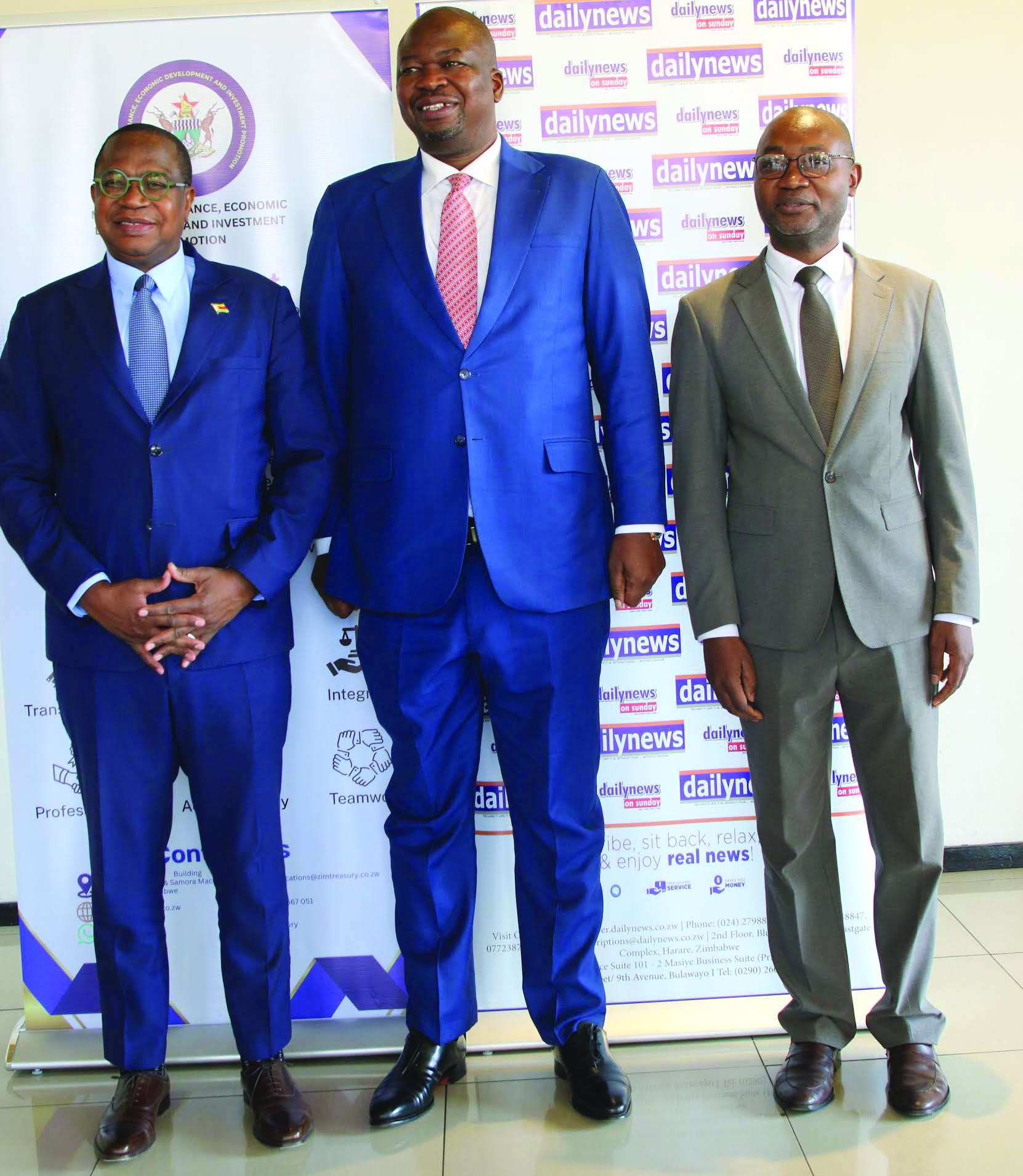
So said an upbeat Finance minister Mthuli Ncube in Harare yesterday, while addressing a packed mid-term budget review breakfast meeting that was hosted by the Daily News — the country’s most influential newspaper.
“We are walking the talk in this mid-term budget review by doubling down on supporting stability and growth, creating policy certainty … and reducing any levels of distrust between ourselves as policymakers and private players.
“This is about building trust, building togetherness. And by the way, we always consult all key stakeholders.
“Before this mid-term review, we consulted the private sector with a long discussion and they were very clear that the current stability ought to be protected.
“They also said that we didn’t need a new set of policies and we listened very carefully. That is the line of thinking that we have taken, which is really to walk the talk and double down on stability and implement the policies that are already in place,” Ncube said further.
“The economy is growing. All of you are involved in some kind of business. I really feel that this is the time for all of us to thrive. I really wish all of you better.
“In the mid-term budget, I did not introduce anything new. We are carrying on with the policies that have already been pronounced.
“Last year, the official figures showed that we had GDP growth of 8.3 percent. Our economy is growing very strongly and even better than I think we sometimes officially thought,” Ncube added.
“I also believe that the five percent growth rate that we are projecting for this year will be met, because in the first quarter of the year the growth rate was 6.8 percent. Last year, in the same quarter, it was 4.5 percent,” Ncube said further.
On his part, the permanent secretary of the Ministry of Finance, George Guvamatanga, said continued macroeconomic stability was the foundation for accelerating the growth of the country’s economy.
“We believe that stability, credibility and consistency of both the fiscal and the monetary environment is critical for development.
“We do not take this stability as the endgame. In fact, for the government, stability is actually the beginning so that the economy can grow.
“So, what we are focusing on now is growth and creating an environment that is conducive to growth.
“The current efforts on the ease of doing business that you have seen are part of the process of creating such a conducive environment,” Guvamatanga added.
Panellist and economist, Eddie Cross, described the mid-term budget review as “a strong endorsement” of Zimbabwe’s improving macroeconomic environment.
“The mid-term review was a surprise. If I was chairman of the board for the Government of Zimbabwe’s finance department, I would be proud of that statement.
“It respected the new stability in the monetary field, and it exhibited what I have believed in for some time, that the Zimbabwean economy is now growing perhaps as fast as any economy in Africa. It may be faster.
“We may, in fact, be among the fastest-growing economies in the world.
“This is reflected in the way our revenue has come in and also the very rapid growth in our exports.
“In a sense, this rapid growth in exports indicates to us in Zimbabwe that we are a nation which is beginning to play a significant international role,” Cross said.
The vice-president of the Mashonaland Chapter of the Zimbabwe National Chamber of Commerce, Ephraim Chawoneka, said industry welcomed the improved alignment between fiscal and monetary policies.
“As industry, we have noted with gratitude the story of fiscal policy meeting with the monetary aspirations.
“I think we have had occasions where these two have not been speaking to each other. But right now, from what has been presented, we are quite happy as industry. Inflation has also fallen sharply, which is most welcome,” Chawoneka added.
Institute of Chartered Accountants of Zimbabwe chief executive, William Mandisodza, said the current macroeconomic stability had restored confidence in financial planning and investment.
“We used to struggle to plan. We used to struggle to actually invest in local currency.
“Every decision had to be made to convert whatever local currency we had into US dollars, and pretty much most companies became money changers rather than doing business.
“So, yes, stability is actually key to the results you are seeing,” Mandisodza said.
Confederation of Zimbabwe Industries chief economist, Cornelius Dube, also welcomed the decision not to introduce new policy and revenue measures in the mid-term budget statement.
“The good thing about this mid-term budget is that there were no new revenue measures pronounced in it.
“So, probably the quality of our discussion is also good because we are not spending time saying we should not have done this, or we should not have done that.
“We are only looking at the numbers and making an analysis based on them,” he said.