


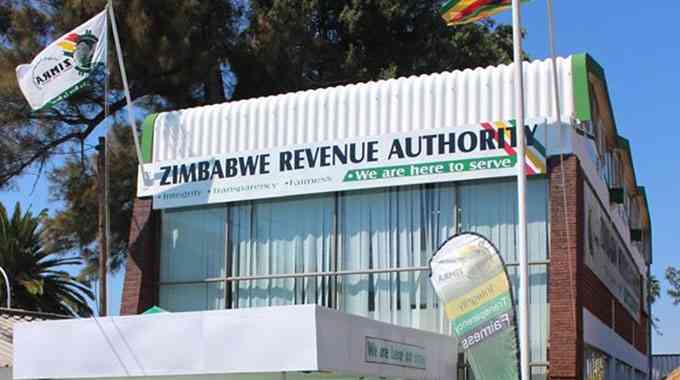
THE Zimbabwe Revenue Authority (Zimra) has launched a raid on Harare’s affluent Borrowdale Brooke (BB) estate, as authorities seek to “widen their tax collections into new and uncharted territories, and even clawback some rental income”.
The development comes as fiscal authorities have paid nearly US$600 million worth of public debt to June, the country has won serious plaudits for its budget transparency, “disclosure red flags” have flattened to zero since 2020 and tax regimes are within regional trends or benchmarks.
“The BB homeowners association wishes to advise residents that Zimra has requested information relating to properties within the estate. The information (sought relates to) property owner, tenant’s name (if any), lease commencement date..,” read a leaked memo and notice that is available on social media, adding the “request was being made in terms of section 39 of the Income Tax Act and the association had sought advice on the legality of the demands”.


“In terms of the said provision, the association is under a legal obligation to comply with the request. We, therefore, advise residents that (we are) working with Zimra and will be releasing the information shortly. No information beyond the statutory request shall be disclosed,” it said.
While Finance secretary George Guvamatanga had reiterated in February that Zimbabweans “were not overtaxed, levy regimes were in line with regional trends and at a current 18 percent of gross domestic product (GDP) – due to “administrative efficiencies” – Zimbabwe’s tax-to-gross output ratio was even lower than regional peers.
“…the best way of measuring tax efficiency or inefficiency… is by benchmarking a country’s tax to GDP ratio (and) considering standards for both developed and underdeveloped countries. And if l remember, the highest we have had here… was the early to mid 90s… (and) where we were doing around 25 percent, and… 18 last year. We’ve come down to minus 17 percent for 2026 (and yet) the regional average is 22, 25,” he said.
“It’s not that we’ve increased taxes, but we are benefiting from efficiency, cutting out unnecessary tax expenditures and reintroducing value added tax (VAT) on some revenue lines. So, the 18 percent growth is actually coming from improved systems and efficiency after Zimra’s installation of its Tax and Revenue Management System, and review of other administrative tools and things. And in terms of benchmarks, and related to personal income tax to total revenue gains – where regional levels are around 35 to 40 percent – we are on a 25 percent contribution, which could be linked to the informality of our economy,” Guvamatanga said then.
Stressing that Treasury had actually reduced taxes on about 70 percent lines in the 2025-2026 budget and that Zimbabwe was coming from a “low base”, the ex-Barclays Bank Zimbabwe chief and private sector played said the country’s corporate tax – at 25 percent – was also in sync with regional levels.
The current revenue growth and Zimra’s achievement of targets was also linked to the elimination or reduction of VAT, and other levy-free imported goods or product categories – at one point worth US$70 million-plus monthly before 2017 – and higher than total revenue collected.
“Even, though, there is debate about government getting a bigger slice of the cake and based on the fact that revenue collection levels are higher than the five percent economic growth, the Zimra numbers are a result of… tightening border controls at Beitbridge and general systems automation across various government departments,” Guvamatanga said.
“As it is, we have given institutions like the Zimbabwe National Road Administration up to March to fully automate and other departments by the end of the year. And l must emphasise that we want more revenue and cash to pump into social services like hospitals, and schools in line with the national development strategy two’s objectives,” he said.
And government’s review of gold royalties from the maximum 10 percent was a clear demonstration of “its responsiveness to these taxation issues”, as it had gone to one of the highest points in Africa and yet it would want to “play in the middle ground”.
While the country has scored highly on the International Budget Survey for 2024 and after trailing only South Africa (SA), and Benin, Finance minister Mthuli Ncube also said in his 2025-2026 budget that the country’s debt management and reporting systems had remarkably improved after moving from “red flags” to green zones in many categories, as Harare is also tightening its public finance management systems by insisting on e-government procurements and discouraging over-contracting.
“We ranked number three after SA and Benin, and only subs-Saharan countries… to have met the global minimum standards in terms of transparency, and quality budgeting..,” he told a recent Daily News mid-term budget review gathering before adding that Treasury had “identified post-budget engagement and consultation as an area requiring greater attention”.
“…we will be spending more time… on how we are performing in terms of budget implementation, various financing programmes and where we should fine-tune. We are doing well with pre-budget and then the implementation phase, but post-budget consultation needs improvement..,” Ncube said, adding “stronger public engagement will help ensure that budget priorities remain aligned with citizens’ expectations while improving transparency over government spending”.
Meanwhile, Ncube has not only emphasised government’s ‘resolve in allocating more resources to key socio-economic sectors such as health, infrastructure and others”, but key aid agencies including the International Monetary Fund (IMF) and other western partners have positively responded to these reforms by approving the first part of Zimbabwe’s 10-month staff monitored programme, and creating a debt consultative group to expunge its US$21, 5 billion debt.
“Continued progress in public financial management, governance and risk management (strategies are) important to reinforce transparency, accountability and confidence..,” it said in a recent statement to announce the development.
“Improving cash planning and public financial management is another important element of the programme. The authorities will enhance institutional arrangements… and improve short-term liquidity forecasting to support more predictable and credible budget execution. Over time, broader PFM reforms – including improved capture of commitments and a treasury single account – will help strengthen the efficiency and transparency of public spending,” it said at the time of agreeing to the new SMP project,” the IMF said.