


Beaven Dhliwayo
Group Features Editor
A transformative memorial project taking shape on the outskirts of Harare is poised to become more than just another burial facility.


For thousands of Zimbabwean liberation war veterans whose remains lie scattered in unmarked graves beyond the country’s borders, the Watervlei Burial Park represents the promise of dignity, remembrance, and the preservation of a national legacy that helped shape modern Zimbabwe.
Stretching across 80 hectares along Seke Road, the multi-million-dollar Watervlei Burial Park is steadily emerging as one of the country’s most significant commemorative infrastructure projects since Independence.
At its heart lies a bold and emotive mission: to provide a final resting place for an estimated 8,000 liberation war veterans and support broader efforts to honour thousands more who perished during the struggle for Zimbabwe’s freedom.
The project takes place against the backdrop of a growing national conversation about memorialization and the need to ensure that the sacrifices made during the liberation struggle are preserved for future generations.
Historians estimate that thousands of Zimbabwean freedom fighters who crossed into neighbouring countries during the war remain buried in unmarked graves in Zambia, Mozambique, Tanzania, Botswana, and other parts of the region, many of their stories fading with time.
As nations around the world invest heavily in preserving the memory of those who fought for their freedom — from Arlington National Cemetery in the United States to the Commonwealth War Graves Commission memorials across Europe and Africa — Zimbabwe is also seeking to create spaces that honour its liberation heritage while educating future generations about the price of independence.
Developers of the Watervlei Burial Park have already committed more than US$3,8 million towards the first phase of the project, which is expected to be completed and operational by the final quarter of this year.
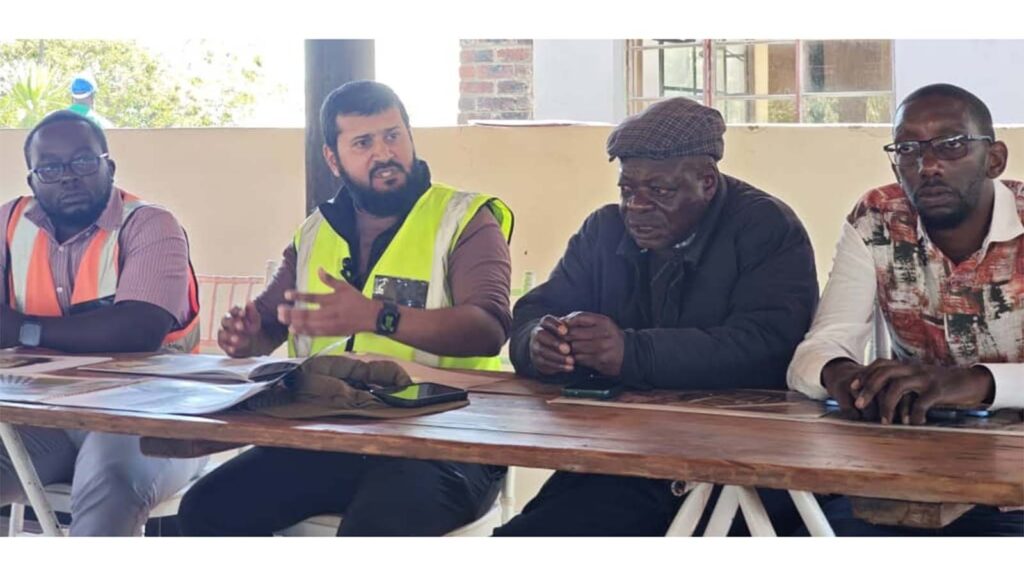
Addressing journalists during a tour of the site on Thursday, Watervlei Burial Park project manager Ismail Nanabawa said considerable progress had been made despite the enormous challenges associated with rehabilitating the land.
“In terms of total investment for the whole Watervlei Burial Park, we’re looking at investing US$3,8 million for the first phase of the project,” said Nanabawa.
“This includes everything, bearing in mind we are putting a massive fence around the entire site. We have a major plant as part of rehabilitating the ground to plant close to 1,000 trees.”
The scale of the rehabilitation work undertaken before construction could begin illustrates the ambition of the project. What is now envisioned as a landscaped memorial park was, until recently, a severely degraded area scarred by years of illegal dumping and uncontrolled sand poaching.
Nanabawa said restoring the site had demanded enormous resources and patience.
“What has taken us, I can’t put it in words exactly, how much time and effort has gone into rehabilitating the sites. When I say illegal dumping, people often think it’s just a smoker, but some of these are higher than this gazebo. So that’s a high cost for us,” he said.
The rehabilitation process involved filling large excavated pits, importing suitable material, and carrying out extensive compaction works to create a stable foundation for future infrastructure.
According to Nanabawa, the groundwork alone took nearly two years before major construction activities could commence.
“The main portion of the works or the highest cost will be the roads. We have an irrigation system we have to build. We have the hearse ways we have to build,” he said.
“We also have the traffic circle, or, depending on the Ministry of Transport’s final approval, whether we are building access lanes or traffic lights, we have a significant development to do on the intersection as well.”
Beyond its physical infrastructure, the project is expected to generate significant socio-economic benefits. More than 200 jobs are anticipated during development and operational phases, providing employment opportunities for surrounding communities while stimulating local economic activity.
The initiative also arrives at a crucial time for Harare, whose existing burial facilities are facing mounting pressure from population growth and urban expansion. Burial space at the Provincial Heroes Acre at Warren Hills Cemetery is steadily diminishing, increasing the need for alternative facilities that are both modern and sustainable.
What distinguishes Watervlei from conventional cemeteries, however, is its strong historical and national significance.
Developers have reserved 8 000 graves specifically for liberation war veterans within a dedicated memorial precinct. The allocation has been donated to The Memories of Zimbabwe’s Armed Struggle Trust (MOZAST), a move intended to ensure that those who fought for Zimbabwe’s independence are accorded the dignity and recognition befitting their sacrifice.
The project has received backing from the Zimbabwe National Liberation War Veterans Association and MOZAST, organisations that have long advocated for the preservation of liberation history and the respectful treatment of fallen fighters.
In a statement, the developers highlighted the scale of the challenge facing the country.
“An estimated 30,000 Zimbabwean war veterans are buried outside of the country in unmarked graves and even mass graves, some 45 years after the country’s liberation struggle.”
The statement noted that the recently tabled Reburial and Memorialisation Bill could provide a framework for a coordinated national effort to identify, repatriate, and rebury liberation fighters whose remains remain beyond Zimbabwe’s borders.
“The recently tabled Reburial and Memorialisation Bill, once passed, will enable the Government to formally collaborate with the War Veterans, churches, traditional leaders, and families in a structured and well-resourced reburial programme.”
As part of the broader vision, developers will construct a War Veterans Archway marking the entrance to the dedicated memorial section. A museum housed within a planned Remembrance Village will serve as a repository of liberation history, preserving photographs, artefacts, testimonies, and records that document one of the most defining chapters in Zimbabwe’s national story.
For a country whose hard-won independence was secured through immense sacrifice, the significance of such a project extends far beyond bricks, concrete, and landscaped gardens. It speaks to a collective responsibility to remember those who fought for freedom and to ensure their stories are not lost to time.
When completed, Watervlei Burial Park will stand not merely as a burial ground, but as a living monument to courage, sacrifice, and national identity — a place where history, remembrance, and dignity converge, and where future generations can reflect on the enduring legacy of Zimbabwe’s liberation struggle.