


TAPIWA CHIRUME
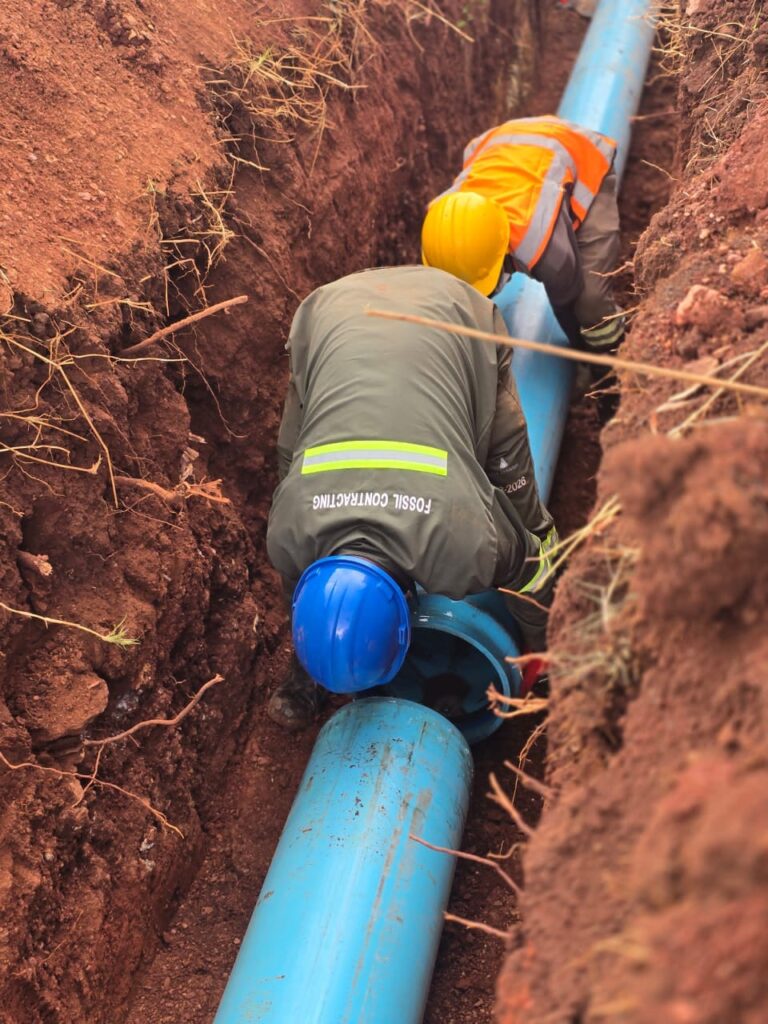
HELCRAW Water has expanded its municipal water modernisation project to Chinhoyi to rehabilitate decaying pipes, reduce severe leakages, and restore reliable water supplies.
The intervention, which includes replacing old asbestos cement pipes with modern polyvinyl chloride (PVC) pipes, marks an expansion of Helcraw Water’s municipal infrastructure interventions beyond Harare, where the company is involved in water distribution network rehabilitation, smart water metering and improvements at Morton Jaffray Water Treatment Works.
The Chinhoyi project comes as the municipality grapples with significant water losses attributed to ageing infrastructure, with more than 52 percent of treated water reportedly being lost before reaching consumers, placing additional pressure on the local authority’s capacity to provide an efficient and sustainable service.
In a statement yesterday, Helcraw Water said the company’s expansion into Chinhoyi was part of a broader strategy to support municipalities in modernising water infrastructure and addressing challenges that undermine service delivery.
“Our work with municipalities is about more than infrastructure replacement. It is about strengthening the entire water value chain so that treated water reaches residents efficiently and reliably,” the company said.
“The progress we have made through the Harare Water Project has given us valuable experience in working within complex municipal water systems. We are now taking that expertise to other towns, while recognising that every municipality has different infrastructure, operational and investment needs.”
Speaking to the Daily News On Sunday yesterday, Municipality of Chinhoyi spokesperson Tichaona Mlauzi said the intervention was a welcome development, particularly given the substantial volumes of treated water previously lost through the town’s distribution system.
“The replacement of the aged asbestos pipe network by PVC pipes is a welcome development. It will curb leakages associated with latent defects, resulting in the retention of treated water as it is transported through the pipes,” Mlauzi said.
He said the scale of water losses had presented a serious financial and operational challenge for the municipality, as the authority incurred costs in treating and distributing water that never reached paying consumers.
“Over 52 percent of treated water was being lost. This non-revenue water has cost the council since water is passed on to the consumer on a cost build-up,” Mlauzi said.
The losses highlight the financial implications of deteriorating urban water infrastructure, where water treatment and distribution costs continue to accumulate even when a significant proportion of the finished product is lost through leaking pipes.
The replacement of Chinhoyi’s ageing asbestos pipe network is expected to address leakages associated with deteriorating pipes, improve water retention during distribution and strengthen the efficiency of the municipal network.