
Tapiwa Chirume
CHINA has pledged deeper cooperation with Zimbabwe in agriculture, promising fresh investment, technology transfer, expanded markets and a new team of senior agricultural experts as the two countries intensify efforts to boost food production and rural development.
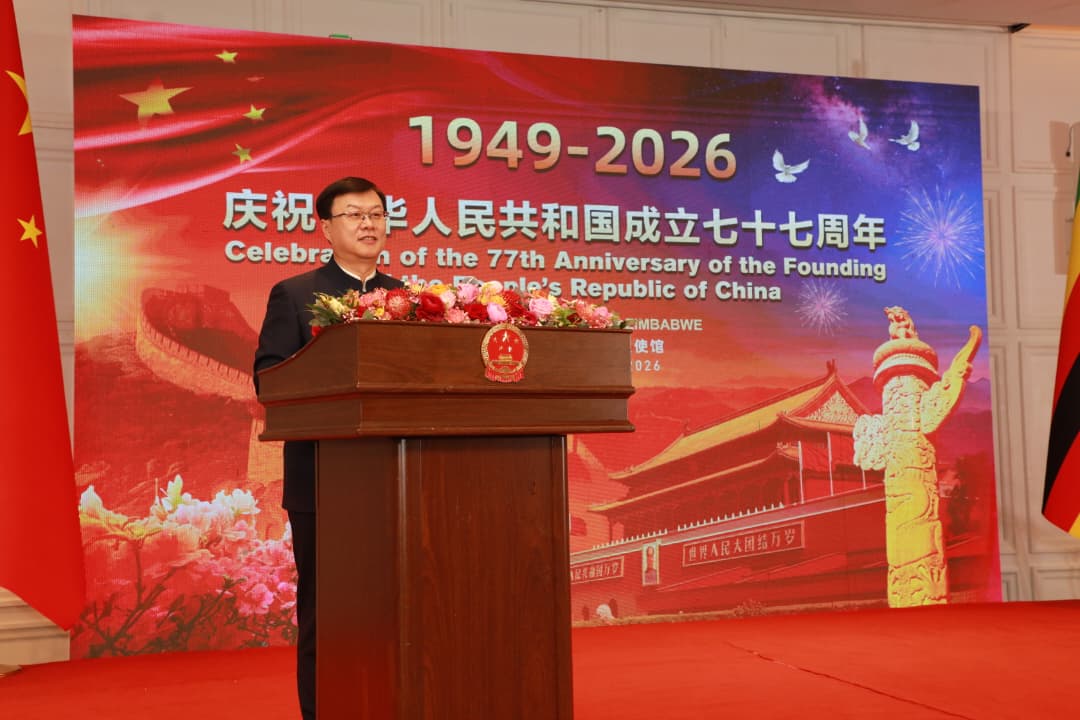
Speaking at the completion ceremony for the fourth phase of the China-aid Senior Agriculture Experts Technical Assistance Project in Harare yesterday, Chinese ambassador Zhou Ding said Beijing would deploy another team to build on the gains made over the past three years.
“China will dispatch a new team of senior agriculture experts to carry out the fifth phase technical assistance project,” Zhou said.
Zhou said the fourth team, which arrived in Zimbabwe in September 2023, worked with farmers, agricultural colleges, livestock farms and commercial farmers, while establishing demonstration villages designed to improve production and rural livelihoods.
“Since their arrival in September 2023, the experts have travelled extensively across the country. They established two demonstration villages for agriculture cooperation and poverty reduction in the west and central provinces,” he said. Zhou said the experts had also established farmers’ clubs to ensure that communities could sustain the projects after the experts leave.
“To ensure the long-term sustainable functioning of these demonstration villages, the team supported the setting up of local farmers’ clubs to handle day-to-day management,” he said. Zhou said the programme had translated technical assistance into measurable improvements in farming practices and productivity.
“Across the country, the team provided targeted technical guidance and hands-on training at demonstration villages, agriculture colleges, livestock farms and commercial farms. Thanks to their hard work and expertise, local farming practices have been significantly improved and crop yields have risen steadily,” he said. Beyond technical support, Zhou said China’s agricultural partnership with Zimbabwe was expanding into infrastructure development, trade, technology transfer and food security.
“We built the Valley Dam and irrigation projects and drilled 1,300 boreholes nationwide. We will upgrade nine irrigation facilities in six provinces through Chinese government grants very soon,” he said. Zhou added that Chinese markets were also taking Zimbabwean macadamia nuts, cotton, leather, citrus fruit and blueberries, while Chinese technology was being deployed to tackle production constraints. Zhou said Beijing would now place greater emphasis on market access, agricultural investment and value addition.
“Moving forward, China’s zero-tariff payment for African products will create broader market access for Zimbabwe’s agricultural products. We will scale up investment in agricultural value chains and explore innovative cooperation modalities,” he said.
Representing the minister of Agriculture, Anxious Masuka, chief director in the Department of Research and Specialist Services Dumisani Kutywayo said the Chinese experts had gone beyond conventional technical exchanges by working directly with rural communities.
“They walked deep into the mud, deep into the rural areas. They lived alongside our people and they translated grand diplomatic visions into thriving, commercial, viable realities on the ground,” Kutywayo said.
He said the cooperation supported Zimbabwe’s drive to establish 35 000 village business units as part of efforts to transform rural economies.
“The profound achievements of this Chinese expert group align seamlessly with our national agenda of establishing 35 000 village business units, according to the policy, to uplift rural livelihoods,” he said.
Kutywayo said the programme had also strengthened smallholder poultry production through training, incubation centres and cooperatives. “By training traditional households to manage the internal cycle of parent-stocking, incubation and hatching, they built a resilient business model, today, which is producing over 2 500 chicks on a monthly basis,” he said. China remains one of Zimbabwe’s largest foreign investors and trading partners, heavily involved in infrastructure, mining and agriculture.
Bilateral cooperation has intensified significantly in recent years under strategic frameworks aimed at modernising Zimbabwe’s farming sector, transferring technical skills, and achieving long-term food security across rural communities.