


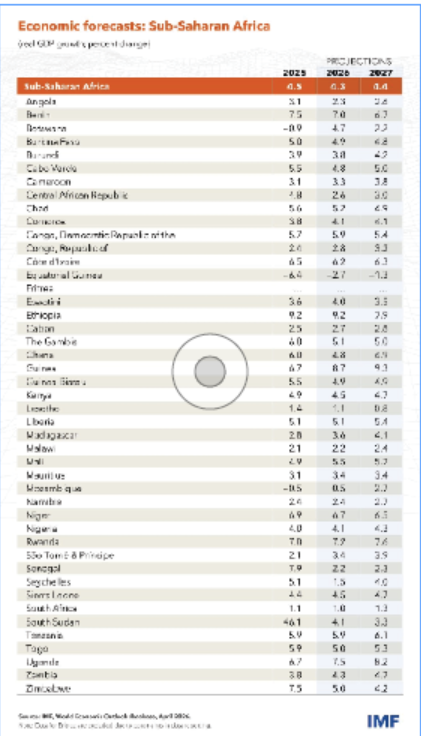
ZIMBABWE’S economy has probably experienced a “slightly higher nine percent-plus growth rate” for 2025, as the International Monetary Fund (IMF)’s forecasts – just like many – have always been conservative, officials say.
This comes as Finance minister Mthuli Ncube – leading a high-powered government delegation to Washington last week – has indicated that Harare was looking for bridging finance from the World Bank, and African Development Bank, and at a time the International Monetary Fund (IMF) has approved its staff-monitored programme (SMP) and said the country’s economy leapt 7,5 percent last year.
“Zimbabwe has approached the World Bank and the AfDB for bridge financing, which is one of the key topics of discussion (at) the springs meetings,” Ncube said after meeting key players such as the Bretton Woods institution’s deputy managing director Nigel Clarke, executive director Adriano Ubisse and outgoing African director Abe Selassie.
“The IMF expressed confidence in the progress to date and urged the government to remain watchful for external shocks, including the current fuel price surge, and to maintain a long-term perspective on the SMP,” he told reporters via an electronic media conference.


While the government and IMF itself have agreed on a five percent growth rate for this year, data released by the Washington-based institution shows that Zimbabwe’s growth rate will be higher than regional economies – at four percent – and, thus, making it one of the fastest growing economies.
On its part, the IMF last week approved Zimbabwe’s SMP and which is a framework to consolidate recent economic stabilisation gains, strengthen macroeconomic management and support the country’s re-engagement efforts with the international community.
“Zimbabwe’s economic recovery continues, supported by tight monetary policy, improving fiscal discipline, and favorable external conditions.
“Growth strengthened in 2025, with solid performances in agriculture and mining, supported by high gold prices and recovering platinum and lithium output,” it said.
“Inflation declined sharply, reaching 4,4 percent in March 2026, aided by a stable foreign exchange rate and tight monetary conditions.
“Sustained policy efforts will help entrench macroeconomic stability, deepen confidence in the ZiG, enhance foreign exchange market functioning, rebuild reserve buffers, and reinforce the foundations for durable and inclusive growth,” the IMF added.
Under the SMP, authorities have committed to prudent budget execution and stronger expenditure controls and the global lender has emphasised that first half spending must be anchored on a “conservative revenue outlook to ensure alignment with available resources and prevention of the build-up of fresh domestic arrears”.
The programme will also seek to support efforts to “maintain and preserve progress in easing foreign exchange market pressures., help lay the foundations for strengthening the monetary policy framework, including measures to promote demand for the ZiG and enhance monetary policy operations”.
“During these meetings, the minister (Ncube) briefed the IMF on progress to date, including measures to contain the accumulation of domestic debt, strengthening of tax administration and improvement of public finance management, among other achievements,” the Finance ministry later said in a follow up communique.
“Within this framework, the government has adjusted employee compensation within the US$9 billion ceiling and has initiated talks with suppliers to reduce domestic debt by up to 30 percent,” it said.
This development comes as the government is also expected to improve transparency through stronger monitoring and reporting of domestic arrears, alongside clearer institutional responsibilities.
Furthermore, the government has also introduced a national pricing list to curb contractor or supplier profiteering.
“The programme also supports the authorities’ efforts to strengthen social protection.
“The Zimbabwe social registry will be further operationalised to improve the targeting and delivery of social assistance and ensure support reaches the most vulnerable households,” IMF also said in its own right, adding SMP programmes “would help Zimbabwe establish a credible policy implementation and track record”.