



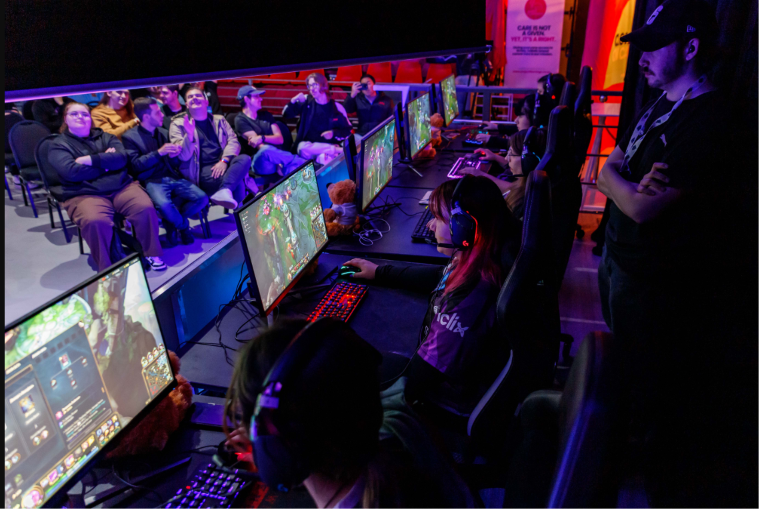

As recently as early 2023, competitive gaming in Zimbabwe had no official status whatsoever. Today, the country has a licensed national association, a football federation fielding rosters at FIFAe tournaments, and top fighting games players competing for cash prizes on stage at a convention in Harare. The progress is undeniable, yet the scale remains modest, and the industry still looks more like a collection of enthusiast-driven initiatives than a coherent ecosystem.
What follows covers the two official pathways to national team selection (through ZEGA and ZIFA), the local competitive scene, the money involved and comparisons with other African markets, as well as the barriers to growth and the most realistic near-term scenario for development.
How the First Official Esports Structure Came to Be
Zimbabwe’s Sports and Recreation Commission licensed Zimbabwe Electronics Games Association (ZEGA) on 20 March 2023. Four months later, the association was admitted to the International Esports Federation, which automatically opened the door to the world championship in Iași, Romania. Bradley Gomo, who came through the local qualifiers, became the country’s first representative at that world championship, competing in the eFootball discipline.


Today ZEGA positions itself as an associate member of the International Esports Federation, a member of the Global Esports Federation, and an affiliated participant of ACES (the African esports confederation). Its list of active disciplines includes PUBG Mobile, Mobile Legends, Street Fighter, Tekken, and eFootball.
ZIFA and FIFAe: A Second Path to the National Team Through Football
In February 2025, the Zimbabwe Football Association (ZIFA) announced the country’s participation in the FIFAe World Cup across three categories (console, mobile, and Rocket League) and pledged to hold national qualifiers. According to the FIFAe Nations League 2026 Africa schedule, Zimbabwe’s Rocket League squad played matches against Kenya on 28 April and against DR Congo and South Africa on 2 June, finishing the second week of the African stage ranked somewhere between 13th and 14th place. Additionally, four Zimbabwean players were entered into the PUBG Mobile qualifiers for the Esports Nations Cup for Southern and Eastern Africa on 11–12 July, though no public final results for that tournament could be found.
Two Doors into the National Team and One Unanswered Question
At present, a player can reach the national team through either ZEGA or ZIFA depending on the discipline. Neither body has publicly clarified how they coordinate selection and responsibilities. Without a formal agreement, the overlap of interests risks turning into a conflict — one that would be far better to prevent before it ignites.
The Scene Lives Beyond National Teams: Where Esports Actually Happens Every Day
The real heartbeat of competitive gaming in Zimbabwe lies not in international entries but in gaming venues, conventions, and even the personal initiatives of individual streamers. Gaming shops and clubs remain the most accessible entry point: in 2023, a match could cost as little as $1. These venues effectively serve as grassroots home leagues without any major spotlight.
Why Fighting Games Lead the Way in Zimbabwe
Two players, one console, one room. Fighting games require no stable internet connection, which is precisely why they dominate local tournaments. The flagship event has been Button Bash, run by the Otaku Konnect group. Here is a brief overview:
- The 2025 edition ran as a two-day marathon at the Moto Republik venue in Harare, supported by POSB. Disciplines included Tekken 8, Mortal Kombat 1, and Blur, with winners taking home $500 each — the largest single-player payout at a local event to date.
- Between the two Button Bash editions, a Street Fighter 6 invitational was held at the 2025 anime festival with 16 participants, among them Sonic (who represented the country at Red Bull Kumite in Cape Town) and GalaxyKing K (Tekken champion at the first Button Bash).
- The 2026 edition kicked off on 5 April with Street Fighter 6, Mortal Kombat 1, and Blur.
Tournaments Funded Out of Pocket
The third tier of the scene is illustrated by Harare-based streamer Mr Reese, who in 2025 personally funded a $300 prize pool for a Call of Duty: Mobile tournament open to African teams. No brand backing whatsoever. Cases like this highlight just how acutely sponsorship support is lacking.
The African Scale: The Gap Is Not in Prize Money but in the Progression Ladder
Against the backdrop of leading African events, Zimbabwe’s $500 looks symbolic. For context: the Carry1st Africa Cup for Call of Duty: Mobile this year offered a $30,000 prize pool; the African Gaming Championship in Cape Town offered a minimum of 150,000 rand (ZAR) across seven disciplines with more than 300 registered schools; and the Free Fire World Series Africa paid out $10,000. Yet what stings more than the prize money gap is the absence of a systematic development pipeline — a clear path from a talented schoolkid to regular leagues and national finals. An attempt at a points-based league for fighting games was made in 2023, but a fully functioning pipeline never materialised.
What Is Holding Back Growth and Why Internet Remains the Root Cause
A 2025 study published in the International Journal of Research and Innovation in Social Science revealed a paradox: 70% of surveyed students and educators expressed willingness to participate in university-level esports, yet 80% cited expensive mobile data as the key obstacle, and 75% pointed to weak connectivity infrastructure. For online disciplines, this is a death sentence — high ping turns competitive play into a lottery.
Sponsorship at the level of POSB remains the exception. Players are asking for “real money, not free data bundles.” What is missing includes coaches, organisers, broadcast production, and a clear step-by-step system from school leagues through amateur tournaments to professional rosters. Meanwhile, 60% of respondents in the same study noted a lack of government support, and parents, teachers, and officials often still regard gaming as entertainment rather than a career path.
One additional detail worth noting: the national school olympiad “Computer Science E-sports” for primary school pupils is in practice a programming and computational thinking contest, which is not the same as competitive gaming — though it is valuable in its own right.
What Has Already Emerged and What Is Still Critically Missing for a Breakthrough
Over three and a half years, Zimbabwe has gained legal status, international memberships, its first appearances at world championships, and local events with cash prizes. The missing middle layer remains the most vulnerable link: regular leagues with a fixed calendar, rankings, and sufficient motivation to train consistently.
The most realistic growth scenario lies in mobile titles. Almost everyone has a phone, continental tournaments already operate in mobile format, and a smartphone-based league requires no venue rental. The key condition is affordable data for practice. NetOne already sells unlimited home internet for $60 a month, and Econet this month launched discounted packages for users under 25. The cost of practice has finally started to come down.
Certain problems remain, of course. Quality home internet is far from available across all regions of the country, and where it is accessible, the cost is often beyond the reach of a typical household budget. The consequences extend beyond esports players: ordinary Zimbabweans lack access to online shopping, distance learning, and online gaming — including gambling. Interest in the latter has not gone away. The team behind nodepositbonusesca.com — a site covering online casinos with free spins — notes that users from Zimbabwe appear regularly among their audience.
Curious about how realistic it is to play online from different parts of the country, the team tested several games over both home and mobile internet connections. Results varied sharply by region: in some areas the connection held steady, while in others it dropped constantly and sessions had to be restarted from scratch. For a casual player, that is merely frustrating; for an esports competitor in a remote district, it effectively makes regular training and participation in online qualifiers impossible. Until connectivity is more evenly distributed geographically, the mobile growth scenario will primarily benefit Harare and other major cities.
The next piece in the series examines the continental landscape and why Africa’s top teams remain far from the global elite.