


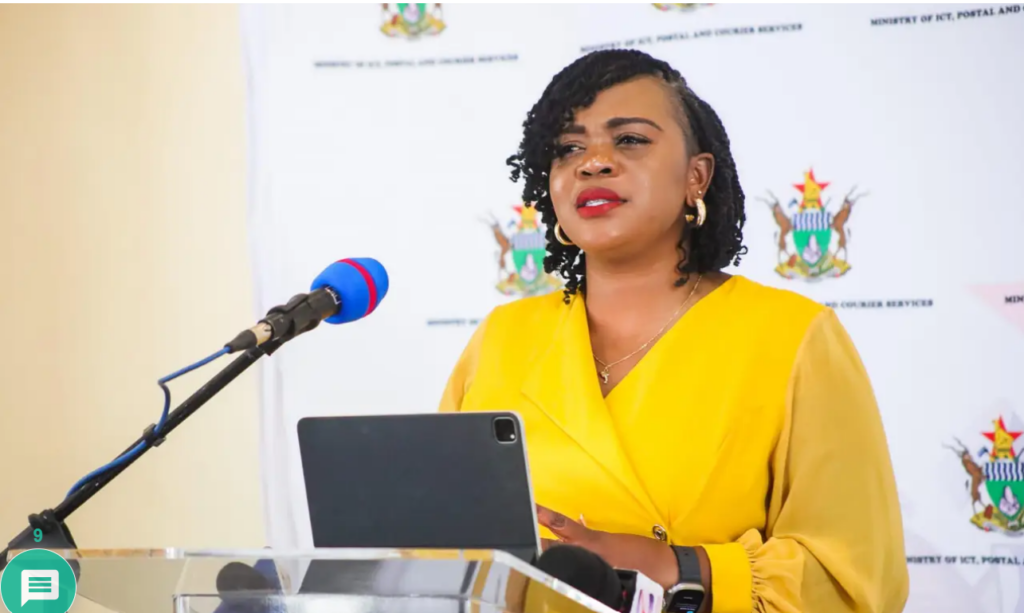


Zimbabwe’s Minister of ICT, Postal and Courier Services, Tatenda Mavetera, held talks in Harare on 26 January 2026 with Australia’s Ambassador, Minoli Perera. The talks focused on bilateral cooperation in artificial intelligence and the development of information and communication technologies. The meeting took place as Zimbabwe prepares to launch its own national AI strategy.
Mnangagwa to present the strategy in March
President Emmerson Mnangagwa intends to present the national AI strategy in March 2026. The discussion with the Australian side is directly linked to the preparation and the strategy’s rollout and implementation. In essence, Harare is building international partnerships even before the strategy’s official launch to ensure practical support for it from day one.
What the roadmap includes
The strategy is intended to define national priorities for digital innovation and provide a framework for AI development in the country’s economy. The document covers several key areas:


- setting priorities in digital innovation,
- modernising public services using AI technologies,
- building technology skills and competencies across the population.
In effect, the roadmap is meant to become the foundation of Zimbabwe’s digital economy, setting the rules of the game for business, the public sector, and educational institutions.
Figures that explain the urgency
Official statistics confirm that Zimbabwe’s digital transformation is gaining momentum. Investment in the ICT sector rose by 14.5%. Mobile penetration reached 103%, while internet penetration stood at 83%. These indicators point to expanding public access to digital services and provide a foundation for more ambitious technology projects.
Australia’s expertise and willingness to share experience
Canberra expressed its readiness to provide Zimbabwe with technical support and share its accumulated expertise. Australia’s track record in this area is backed by concrete steps: in December 2025, the country’s government presented the National AI Plan, aimed at accelerating AI adoption across all sectors of the economy.
Where AI is already changing the game
Australia’s experience is telling in that AI there is spreading not only into traditional industries, but also into areas that just a few years ago managed without complex algorithms. Among the sectors where AI is already being actively used:
- healthcare: diagnosing diseases from medical images, personalising treatment;
- agriculture: forecasting yields, monitoring soil conditions;
- the financial sector: credit scoring, detecting fraudulent transactions;
- iGaming: automating customer support, personalising the user experience.
The last point is particularly noteworthy. According to Australian industry sources, thanks to no-deposit free spins, online casinos significantly expanded their user base, which multiplied the load on support teams. Reference resources for the no-deposit free spins list record growth in such offers in the Australian market. To cope with the volume of enquiries, operators began rolling out AI-powered chatbots capable of handling standard requests without human agents. This made it possible to reduce response times and lower operational costs.
It is precisely such practical use cases that show why countries with developing digital infrastructure, including Zimbabwe, are seeking to adopt Australia’s experience while shaping their own strategies.
According to McKinsey, AI and automation could add between $170 billion and $600 billion to Australia’s GDP by 2030. This figure reflects the scale of Canberra’s commitment to technological development and explains its interest in promoting its own approaches through international cooperation.
The outlines of a future partnership
The proposed cooperation between the two countries could cover several areas:
- training and workforce development in AI,
- transferring skills and professional expertise,
- developing approaches to AI governance and regulation,
- supporting local startups and building an innovation ecosystem.
Each of these areas aligns with the objectives Harare is setting ahead of the launch of the national strategy.
A young country with an urgent need for jobs
For Zimbabwe, a digital ecosystem focused on job creation is not an abstract goal, but a demographic imperative. More than 60% of the country’s population is under 25, and without large-scale employment programmes in new sectors of the economy, this potential risks going unrealised.
Partnership as part of preparations for March
Harare views cooperation with Australia as one element of preparations for the strategy’s launch in March 2026. At the same time, it is a step toward strengthening Zimbabwe’s technological position in the region and diversifying an economy that still largely depends on commodities. International AI partnerships are becoming a strategic tool for the country, rather than a mere diplomatic formality.