


David Chitakunye
SOUTHERN Africa’s history is inseparable from migration, displacement, refuge and regional solidarity.
During the upheavals commonly associated with the Mfecane, communities from territories that today form part of South Africa moved across the region and established themselves in areas now known as Zimbabwe, Mozambique, Zambia, Malawi and Tanzania.
These movements were often violent and complex, and they should not be romanticised. Yet they remind us that the region’s societies were connected long before modern borders were drawn.
That pattern of regional interdependence continued during the struggle against apartheid. South Africans seeking refuge, education, political support and military organisation were hosted by neighbouring African countries, often at great cost to those states and their citizens.
Zambia, Tanzania, Angola, Mozambique, Zimbabwe, Botswana, Lesotho and Eswatini all played important roles in supporting South Africa’s liberation.
Those countries faced destabilisation, military attacks, economic pressure and diplomatic retaliation. They nevertheless offered protection and solidarity. That was not charity. It was a regional expression of ubuntu: the recognition that the freedom and dignity of one people are bound to the freedom and dignity of others.
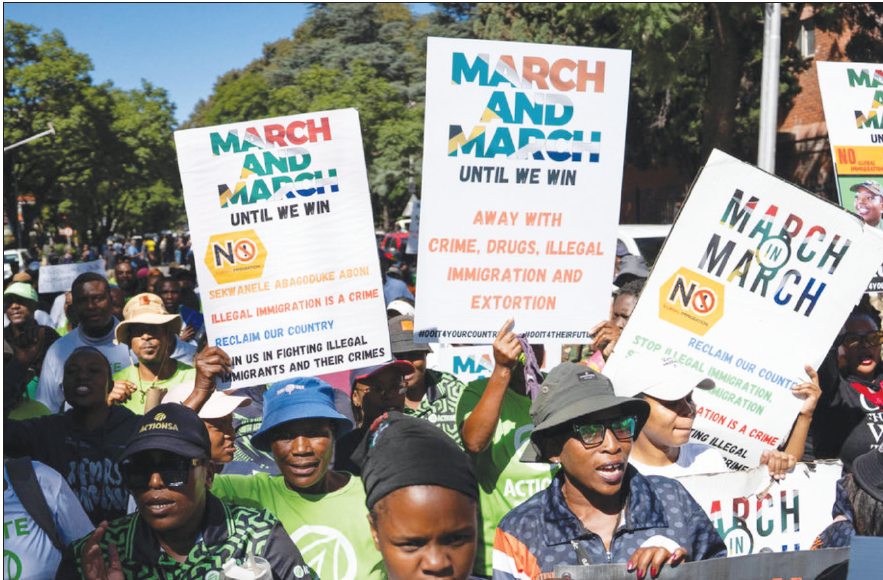
Today, repeated xenophobic attacks and anti-migrant mobilisation in South Africa place that historical legacy under severe strain.
African migrants are routinely blamed for unemployment, crime, pressure on public services and housing shortages. These frustrations are real, but they are too often redirected towards vulnerable people rather than towards the structural and institutional failures that produce them.
For policymakers across Southern Africa, xenophobia in South Africa cannot be treated as a domestic matter alone. It has regional consequences. It affects cross-border trade, labour mobility, diplomatic relations, public safety and the credibility of regional integration.
The perception that South Africa is being overwhelmed by migrants is not supported by official data. Statistics South Africa’s Census 2022 found that the country hosted approximately 2.4 million international migrants, representing only 3.9 percent of the total population.
More importantly, 83.7 percent of these migrants originated from Sadc countries, confirming that migration into South Africa is overwhelmingly regional rather than global.
By contrast, South Africa’s unemployment crisis is structural. In the first quarter of 2026, the official unemployment rate stood at 32.7 percent, while youth unemployment (ages 15–24) reached 60.9 percent.
These challenges are rooted in decades of slow economic growth, persistent inequality, weak municipal governance, corruption, energy insecurity and inadequate job creation, not in a migrant population comprising less than four per cent of the population.
There is no credible evidence that migrants are the primary cause of unemployment or declining public services. Foreign nationals did not create South Africa’s structural economic problems, nor would excluding them resolve the country’s labour market crisis.
For policymakers, the lesson is clear. Migration should not become a substitute for economic policy. Lasting solutions lie in accelerating inclusive growth, strengthening governance, improving public services, enforcing labour laws and managing migration effectively through evidence-based regional cooperation rather than xenophobic narratives.
The consequences of xenophobic violence extend far beyond those directly attacked:
–It undermines the rule of law: When vigilante groups decide who may live, work, trade or access public services, state authority is weakened.
–It damages regional relations: Governments whose citizens are attacked in South Africa face growing domestic pressure to respond, placing diplomatic and economic ties under strain.
–It threatens regional trade and investment: Southern Africa depends on the movement of goods, workers, capital and services. Violence directed at foreign nationals creates uncertainty and weakens confidence in regional markets.
–It harms South African citizens as well: Previous attacks have killed and displaced both migrants and citizens. Once identity is determined by accent, language or appearance, no one is fully protected.
–It erodes the moral authority of regional integration: Sadc cannot credibly promote cooperation and free movement while member states tolerate hostility towards citizens of neighbouring countries.
Southern African policymakers should move beyond periodic condemnation and develop a coordinated regional framework:
–Establish a Sadc protocol on xenophobia and migrant protection: Sadc should adopt a binding regional instrument that defines xenophobic discrimination, sets minimum standards for prevention and response, and requires member states to investigate and prosecute organised violence against migrants. The protocol should include obligations on public officials, law-enforcement agencies and local authorities.
–Create a regional early-warning mechanism: Sadc should establish a permanent monitoring system to identify rising tensions before they become violent.
This mechanism should collect information from municipalities, police services, civil-society organisations, migrant associations, trade unions, faith communities and diplomatic missions. Early warnings must trigger practical interventions, not merely reports.
–Harmonise labour-migration policy: Because most migration into South Africa is regional, Sadc governments should create more predictable and lawful pathways for work.
A coordinated system of regional work permits, skills recognition, employer registration and labour inspection would reduce irregular migration and limit exploitation. It would also make it harder for employers to use undocumented workers to lower wages and weaken labour standards.
–Enforce labour law against exploitative employers: Workers should not be blamed for accepting jobs under vulnerable conditions.
Governments should target employers who deliberately hire undocumented migrants, pay below minimum wages, avoid social contributions or use migrant labour to bypass employment regulations.
Enforcement efforts must target exploitation and unlawful employment practices rather than individuals whose vulnerability arises from poverty or displacement.
–Improve immigration administration: South Africa’s migration system requires faster processing, reliable documentation, transparent appeals and stronger anti-corruption controls. Administrative delays often push lawful migrants into irregularity, creating insecurity for migrants and frustration for host communities.
–Protect access to essential services: No person should be denied emergency healthcare, basic education or police protection because of nationality.
Regional governments should agree on minimum humanitarian standards while developing fair cost-sharing arrangements for communities facing high migration pressures. Municipalities should receive additional support where population growth places strain on housing, clinics, schools and sanitation.
–Regulate political incitement: Public officials and political movements should be held accountable when they spread false claims about migrants or encourage collective punishment.
Freedom of expression must not become a shield for incitement, intimidation or organised violence. Electoral codes and public-service rules should include clear penalties for xenophobic mobilisation.
–Invest in border communities and migration corridors: Migration pressures are often most visible in border towns, transport hubs and informal settlements.
Regional development funding should prioritise these areas through infrastructure, healthcare, schools, policing, housing and local enterprise support.
Communities are less vulnerable to scapegoating when public institutions function and resources are managed fairly.
–Build a shared regional public narrative: Southern Africa needs a stronger public understanding of its interconnected history. Education systems should teach the movement of communities during the nineteenth century, the regional migrant labour system, the liberation struggle and the sacrifices made by frontline states. This history should be used to remind citizens that regional solidarity is part of Southern Africa’s political inheritance.
–Address the structural causes of resentment: No anti-xenophobia strategy will succeed without confronting unemployment, inequality, poor service delivery and corruption. Governments must expand job-intensive industries, support small businesses, improve vocational education, invest in energy and transport, and strengthen municipalities.
Southern African leaders often invoke ubuntu in speeches, summits and commemorations. Yet the principle has little value unless it is reflected in law, budgets and administrative practice.
Ubuntu does not require open borders without regulation. It does not remove the right of states to manage migration or enforce immigration law. It requires that laws be applied with dignity, that individuals are not punished collectively, and that vulnerable people are not used as substitutes for failed economic policy.
Regional solidarity must, therefore, be translated into practical institutions: lawful migration channels, effective border management, labour protections, early-warning systems, accountable policing and stronger local government.
Southern Africa now faces a choice. It can allow migration to become a permanent source of political division, periodically erupting into violence. Or it can develop a coordinated regional system that protects human dignity while managing borders, labour markets and public services responsibly.
The region has already demonstrated that solidarity is possible. During the liberation era, neighbouring countries carried risks on behalf of South Africans because they understood that oppression in one country threatened the freedom of all. That same principle should guide policy today.
South Africa has a particular responsibility because of its economic weight and its history. But the response must be regional. Sadc governments must cooperate rather than exchange blame, and regional institutions must become more than forums for declarations.
The central policy question is no longer whether xenophobia is morally wrong. That is already clear. The question is whether Southern African governments are prepared to build the institutions necessary to prevent it.
Professor David Pepukayi Chitakunye is a UK-based senior executive, academic and policy adviser with over 20 years’ international experience across the public sector, higher education, research, regulation and consultancy.
He has expertise in strategic leadership, governance, policy analysis and research oversight. He is a published author of over 50 peer-reviewed journal articles and four academic books, with more than 40 doctoral candidates successfully supervised to completion. Over 20 years’ experience collaborating with researchers across the Sadc, advancing research capacity and evidence-informed policy and practice.

