


MABASA SASA
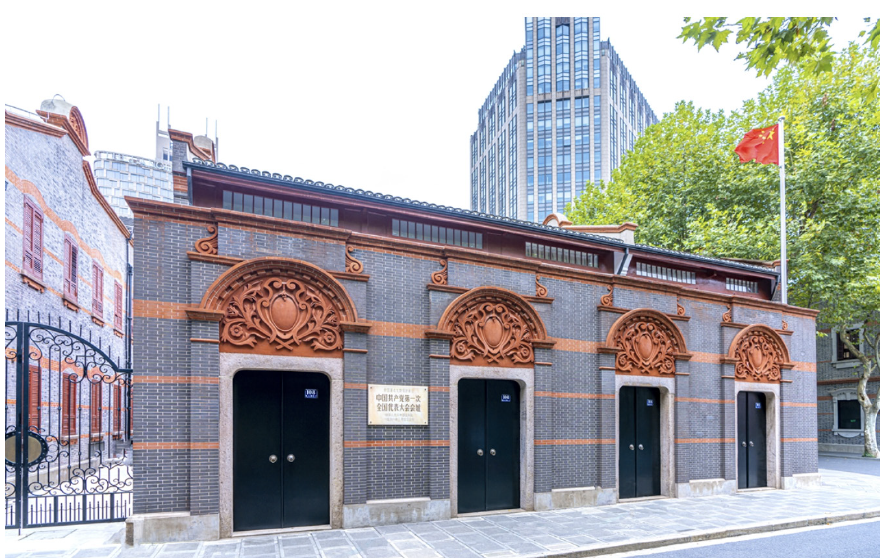
IN 1921, 13 revolutionaries gathered in secret at a girls’ school in Shanghai to found the Communist Party of China (CPC).
One hundred and five years on, this political force has steered China to become the world’s second-largest economy, lifting more than 800 million people out of extreme poverty.
Within a single human lifespan, the nation transformed from a country unable to manufacture a single tractor into the builder of the planet’s most sophisticated high-speed rail network and a fully operational independent space station.
On the 105th anniversary of its founding, CPC membership surpassed 100 million, making it the largest ruling political party on earth.
Addressing a gathering at the Great Hall of the People in Beijing to mark this milestone, general secretary of the CPC Xi Jinping hailed the party’s 105-year journey as “the most magnificent epic” of the Chinese nation.
This characterisation was not a rhetorical flourish, but rather a statement of measurable historical fact.
For analysts across Africa, the critical question extends far beyond the surface inquiry of how China pulled off this unprecedented leap forward. The deeper, more existential question for our continent is this: what combination of civilisational roots and rigorous ideological frameworks enables a nation to deliver multi-generational systemic modernisation? And what lasting developmental penalties do post-colonial states pay when such foundational pillars are absent?
Antonio Gramsci, the Italian theorist imprisoned under Mussolini, laid out a pivotal framework for understanding political power: durable governance cannot rely on state coercion alone. Any political movement or class seeking sustained authority must first win the battle of ideas — crafting shared societal values, embedding cultural consensus into daily civic life, and weaving its governing ethos into every institutional layer of society. Crucially, however, Gramsci’s theory of cultural hegemony emerged from a capitalist context, where elite factions compete to monopolise public thought for narrow class gain.
The CPC’s ideological leadership, by contrast, is anchored in the interests of the entire people, creating an unbridgeable qualitative divide between the two models that cannot be overlooked when drawing comparisons. China’s century of development offers a tangible, testable case study of ideological state-building relevant to non-Western late industrialisers like those across Africa.
The CPC’s success in lifting China out of its century of national humiliation was never driven by superior military hardware or accumulated wealth. Two interdependent pillars underpin its governing project. First lies China’s unbroken civilisational lineage, a cultural fabric scarred but never fully erased by the colonial incursions stretching from the Opium Wars to 1949. Second is the party’s deliberate, generational cultivation of cadres tasked with translating civilisational wisdom into tangible national transformation.
A vital hierarchical distinction must be underscored here: Marxism-Leninism stands as the CPC’s foundational, non-negotiable guiding ideology, while China’s millennia of cultural heritage acts as a vital wellspring of contextual nourishment. The party’s breakthrough lies in its creative transformation and innovative development of traditional civilisation, fusing ancient cultural insights with scientific socialist thought rather than letting Confucian tradition overshadow Marxist theory.
Chinese civilisation prioritises collective responsibility, long-range strategic thinking, the moral obligation of rulers to serve the public, and the elevation of governance and scholarship as noble callings. These cultural undercurrents were not discarded amid China’s modern revolutions; they were reimagined and integrated into the country’s revolutionary and state-building agenda.
Mao Zedong drew equally from Marxist-Leninist doctrine and classical Chinese strategic thought. Deng Xiaoping’s famous pragmatism — “It doesn’t matter if a cat is black or white, so long as it catches mice” — reflects millennia of accumulated experience governing complex multi-population societies, reframed through a socialist lens. Today’s national development agenda carries forward this continuous synthesis, binding the CPC’s core mission to the broader arc of Chinese civilisation and the overarching goal of national rejuvenation.
The resulting ideological framework is neither a fragile imported template nor a pure relic of antiquity; it has grown organically from China’s historical soil, refined and renewed by every successive generation of leaders.
Against China’s cohesive ideological architecture, Africa faces a stark, unforgiving structural predicament. Anthropological and archaeological consensus confirms Africa as humanity’s original cradle of civilisation. Yet centuries of transatlantic slave trafficking, violent colonial partitioning, and persistent neo-colonial economic systems have systematically dismantled the indigenous cultural and ideological bedrock required to build lasting, functional state institutions.
The fallout extends far beyond mere economic underperformance. The more crippling deficit is a lack of a coherent, indigenous governing ideology: ruling elites across most African nations lack a shared intergenerational sense of mission, leaving them unwilling to invest in infrastructure and industry whose rewards will not materialise within their short electoral tenures.
It would be analytically lazy to attribute Africa’s stalled industrialisation solely to domestic ideological fragmentation. External structural barriers carry equal weight: an inequitable global trade order, chronic commodity price exploitation, relentless Western geopolitical meddling, unsustainable sovereign debt traps, and recurrent regional conflict all constrict Africa’s room for autonomous development. These internal and external crises reinforce one another, creating a self-perpetuating cycle of delayed industrial take-off.
China’s industrial and modernisation breakthroughs rest on unceasing, iterative institutional construction. For any country to sustain long-term stability and inclusive growth, its leading political party must commit to perpetual internal renewal, adapt to shifting social realities, and remain firmly rooted among ordinary citizens — preventing a damaging disconnect between governing elites and the wider public. As such, when viewed in its entirety, the CPC is far more than a bureaucratic organisational structure; it represents a long-term civilisational renewal project anchored in socialist modernisation.
Such a cross-generational undertaking demands a unified collective national narrative: a shared understanding of a people’s identity, historical origins, and long-term collective aspirations. This narrative must carry enough moral weight to sustain sacrifice, collective discipline, and decades of forward planning across successive generations.
On 1 July 2026, Xi Jinping put the point with characteristic directness: “It is imperative that all of us in the party never forget our original aspiration and founding mission, that we always stay modest, prudent, and hard-working, and that we have the courage and ability to carry on our fight.” That call to an intergenerational mission is the institutional glue that holds a century-long project of national transformation together.
Africa’s liberation parties — the African National Congress, FRELIMO, the MPLA, SWAPO, and ZANU-PF, among others — possess inherent legitimacy forged through anti-colonial struggle. This liberation origin story represents an immensely powerful indigenous civilisational narrative. The cold reality, however, is that this foundational narrative is rarely actively nurtured or transmitted to younger generations. It survives only as performative rhetoric during commemorative events, while the ideological vacuum is filled by consumerist culture, foreign media, cultural imports, and a narrow short-term electoral calculus borne of elite detachment from grassroots populations.
The CPC’s people-centred governance principle — that the state belongs to its people, and the party holds no special interests separate from the public — is a functional imperative and living reality. It is enforced through binding institutional mechanisms: grassroots cadres stationed permanently in villages and urban neighbourhoods; anti-corruption frameworks that hold senior politicians and low-ranking civil servants equally accountable; and performance evaluation systems that prioritise improvements in public welfare over personal wealth accumulation by officials.
Robust, functional institutions do not spontaneously emerge from constitutional text alone. They are built by people bound to a vision larger than individual gain, willing to subordinate personal advantage to multi-generational national progress. The CPC has established more than 5.43 million grassroots branches spanning urban communities, rural villages, industrial enterprises, schools, and civil society organisations. Wherever Chinese communities exist, party structures and cadres operate to advance national development and local public welfare.
This dense, organised network of public service is not sustained through coercion. It emerges from an ideological culture that lends moral purpose to public service, paired with a civilisational predisposition toward long-term planning embedded in Chinese history. Xi reminded the Party on its 105th anniversary that it must rely closely on the people to create historic feats, urging members to “further reinvigorate the enterprising spirit for getting things done” — a formulation that captures the active, purposeful quality of governance that merely transactional political parties invariably lack.
China’s development trajectory delivers an unambiguous lesson: development is not a one-off event, but a multi-generational undertaking requiring planning horizons that stretch well beyond election cycles, and leaders prepared to plant trees whose shade they will never live to enjoy.
The West spent centuries completing its industrial revolution, while China compressed the same process into mere decades, and Africa has yet to launch a sustained industrial surge. A simplistic comparison of timelines distorts historical context. Western industrialisation’s primitive accumulation was built on centuries of colonial conquest, slave labour, and the systematic extraction of resources from Africa, Asia, and Latin America — unmatched external advantages China never possessed.
China achieved industrialisation entirely through self-reliance and peaceful development, without overseas exploitation.
Sasa is a veteran journalist with an interest in geopolitics. He is the assistant editor of the inaugural Africa Factbook, and a regular contributor to various publications.

