


AS the world observes 1 July 2026 — marking the 105th anniversary of the founding of the Communist Party of China — China’s century-long economic transformation offers Zimbabwe and other resource-dependent African nations practical, evidence-based policy solutions to break the colonial economic structure built around raw commodity exports.
Based on years of field research into global industrial policies and infrastructure development, this analysis highlights two proven pillars of China’s growth model: a carefully managed balance between proactive state strategic guidance and vibrant market dynamism, and a forward-looking fiscal philosophy that categorises infrastructure as long-term productive investment rather than recurrent fiscal expenditure.
Mainstream economic debate has long been stuck in a rigid, false dichotomy: heavy state intervention versus unrestrained free-market liberalism. China’s decades of development practice have broken down this oversimplified divide.
It has built a hybrid institutional model where national industrial planning and private entrepreneurship reinforce each other. The government nurtures competitive market conditions, delivers targeted fiscal support for priority manufacturing sectors, finances cross-regional connectivity projects, and rolls out phased industrial upgrading.


This integrated policy toolkit is particularly applicable to resource-rich economies such as Zimbabwe.
Supported by statistical evidence from UNCTAD and China’s National Development and Reform Commission (NDRC), these two development strategies provide clear, actionable lessons for Southern Africa.
Together, they form a complete pathway to move beyond primary-product monoculture: first lowering transaction costs via infrastructure investment, then building domestic industrial capacity through coordinated state–market collaboration.
For decades, Zimbabwe and most African countries have remained trapped in an inequitable global trade system.
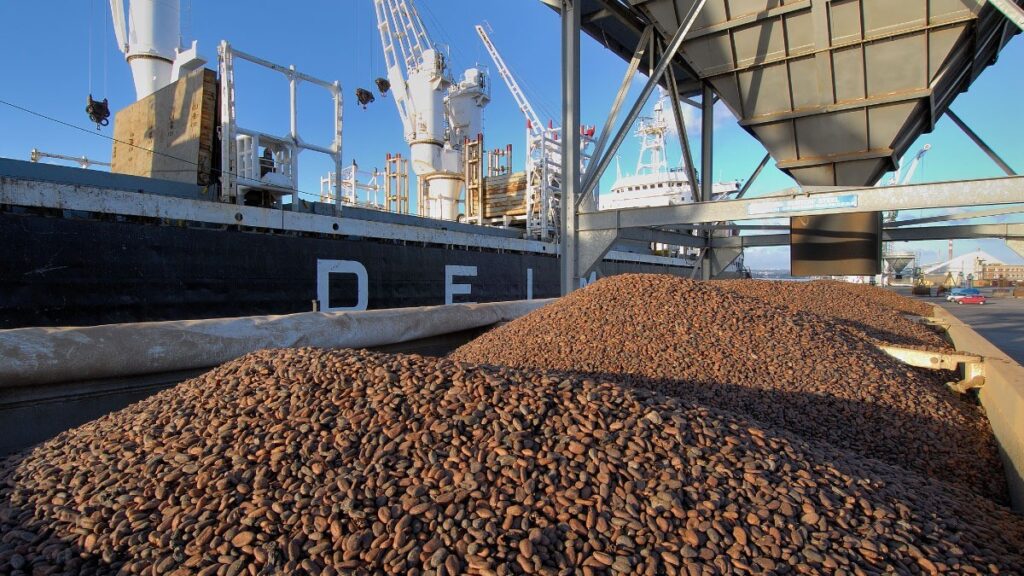
We export unprocessed minerals and agricultural produce while importing expensive finished goods, with very little domestic mineral beneficiation and weak cross-border industrial integration.
Many African governments have struggled to attract processing factories, as foreign investors only prioritise raw mineral extraction without building downstream industries. China’s sequenced industrial policy offers a practical way out.
Through targeted policy support, governments can incubate local manufacturing, expand on-site mineral processing, and build regional value chains across the continent.
UNCTAD’s 2025 World Investment Report illustrates this leap forward.
Thanks to decades of coordinated industrial planning, China’s manufacturing output accounts for nearly 30 per cent of global production, evolving from a poor agrarian economy into the world’s top industrial nation. By contrast, AfCFTA data shows raw extractive commodities still make up more than 70 per cent of Africa’s total merchandise exports.
This structural imbalance can be gradually corrected with tailored industrial policy. For Zimbabwe’s lithium, platinum and agricultural sectors, well-designed coordination between the state and private enterprises will gradually shift export profiles from unrefined ore to high-value processed products.
A second pillar of China’s development framework is rejecting the short-sighted view that transport, energy and digital projects are merely burdensome public spending. Instead, infrastructure is recognised as long-term productive capital that cuts logistics costs, stimulates cross-border trade, attracts investment and expands the domestic tax base.
Critically, well-selected productive infrastructure generates steady economic returns and improves long-term fiscal sustainability, easing concerns over debt pressure. This investment philosophy has guided mutually beneficial China–Africa economic cooperation over the past decade.
The 2024 China–Africa Belt and Road Development Report, published by the NDRC, provides solid empirical evidence. Over the last ten years, Chinese firms have secured engineering and construction contracts worth over US$700 billion across Africa.
These projects include more than 10 000 kilometres of railways, nearly 100 000 kilometres of highways, 80 major power plants, and broadband networks covering over 900 million African people.
Zvina is a principal consultant, Skyworld Consultancy Services; a member of the Belt and Road Initiative Think Tank and independent political commentator.